

Your cat watches you walk out of the room and doesn't move. Your dog follows you to the bathroom. That contrast gets filed under "cats are more independent," and the phrase sticks because it feels true — and because it's easy to repeat. When researchers actually study cat social behavior, though, the picture gets more interesting. Cats aren't less social than dogs. They're social on different terms, with different signals, and they care about different things.
That distinction matters if you live with a cat. Assume your cat doesn't need you, and you'll miss the ways it asks for you. Assume it needs you the way a dog does, and you'll push contact it never wanted.
What Behavioral Research Is Actually Measuring
Studies of cat sociability rarely ask something vague like "does this cat love people?" They measure what can be counted: how close a cat stays to a familiar person, how quickly it recovers after a mild stressor, whether it seeks comfort or hides, how it reacts to a stranger compared with its owner.
That's a narrow window, and the setting shapes the results. A cat tested in an unfamiliar room, handled by people it has never met, will behave differently from the same cat stretched across your sofa at home. Lab behavior isn't home behavior. Reading one headline from one study and applying it to every cat is exactly how the "aloof" stereotype survives.
The Real Difference Between Cats and Dogs
Dogs were bred for work that required reading human cues — herding, retrieving, guarding. Selection favored animals that looked to people for direction. Cats arrived at human settlements for a different reason: grain stores attracted rodents, and a tolerant cat had a steady food supply. Over generations, the cats that could live near people without panicking did better than the ones that bolted.
That history produced what behaviorists call flexible sociability. Cats can do solitary living, and they can do group living. A feral cat with no reliable food source tends to live alone; where food is plentiful, cats form colonies, share space, and sometimes help raise each other's kittens. That's not a loner animal. It's an animal that becomes social when the math works out.
So the honest answer to the headline question is: cats are less dependent on human direction than dogs, and more selective about when they want company. "Independent" is fair shorthand. It just isn't a personality type.
Cats Do Form Attachments
Attachment research borrowed from infant studies offers the clearest counterpoint. In these tests, a cat spends time in an unfamiliar room with its owner, the owner leaves briefly, then returns. Cats that greet the owner and then go back to exploring — treating the person as a safe base — are classified as securely attached. Cats that cling, or that avoid the owner entirely, show insecure patterns.
The largest group in these studies is the securely attached one, and the proportions look similar to what researchers see in human infants. Breed, age and sex don't explain much of the variation. What appears to matter more is early experience and everyday handling: cats who learned young that people are predictable tend to treat people that way as adults.
A cat that doesn't sit in your lap isn't necessarily uninterested. It may simply express interest in a quieter register.
Reading a Cat's Version of Affection
Dog affection is loud. Cat affection uses small signals, and those signals are easy to miss if you're watching for a wagging tail.
- Proximity. Following you from room to room, or settling on the floor near your chair, is a choice. Cats don't spend time near things they dislike.
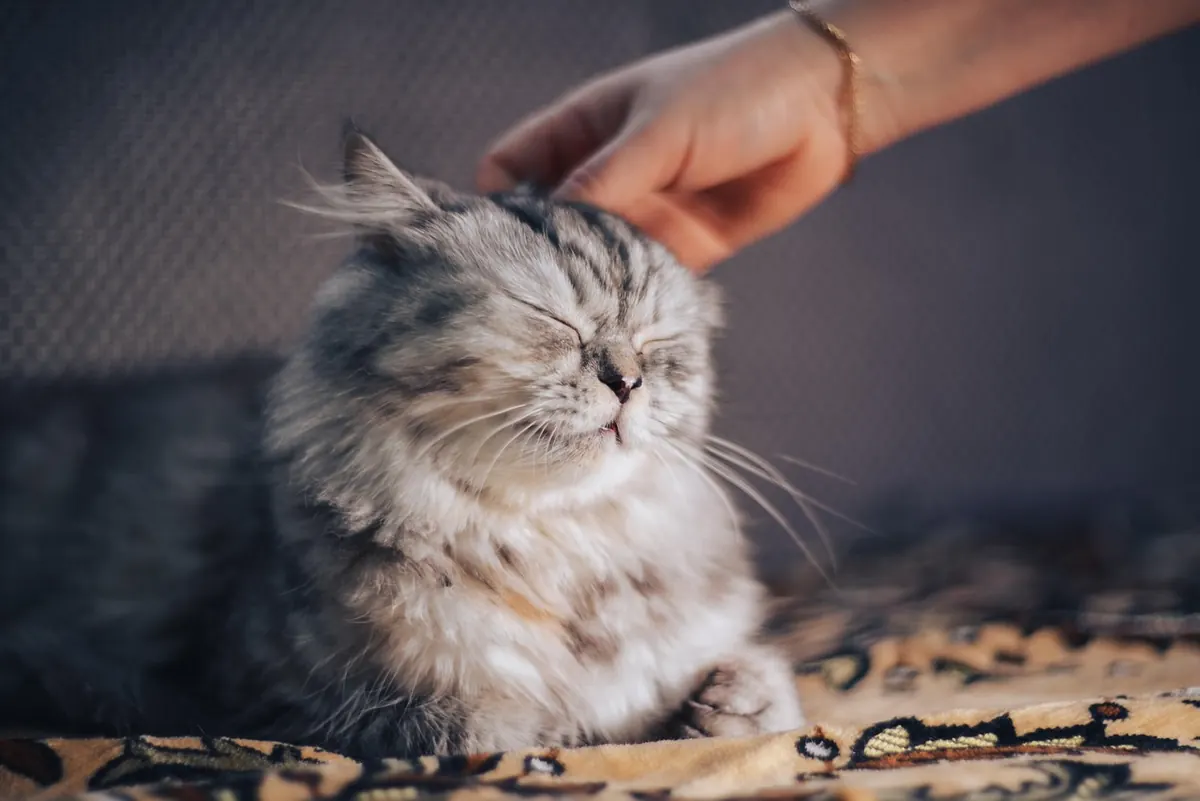
- Slow blinks. A relaxed gaze with a slow close-and-open is a cat's version of a friendly nod. Try blinking back.
- Greeting behavior. A cat that comes to the door, chirps, or head-butts your shin is starting the conversation.
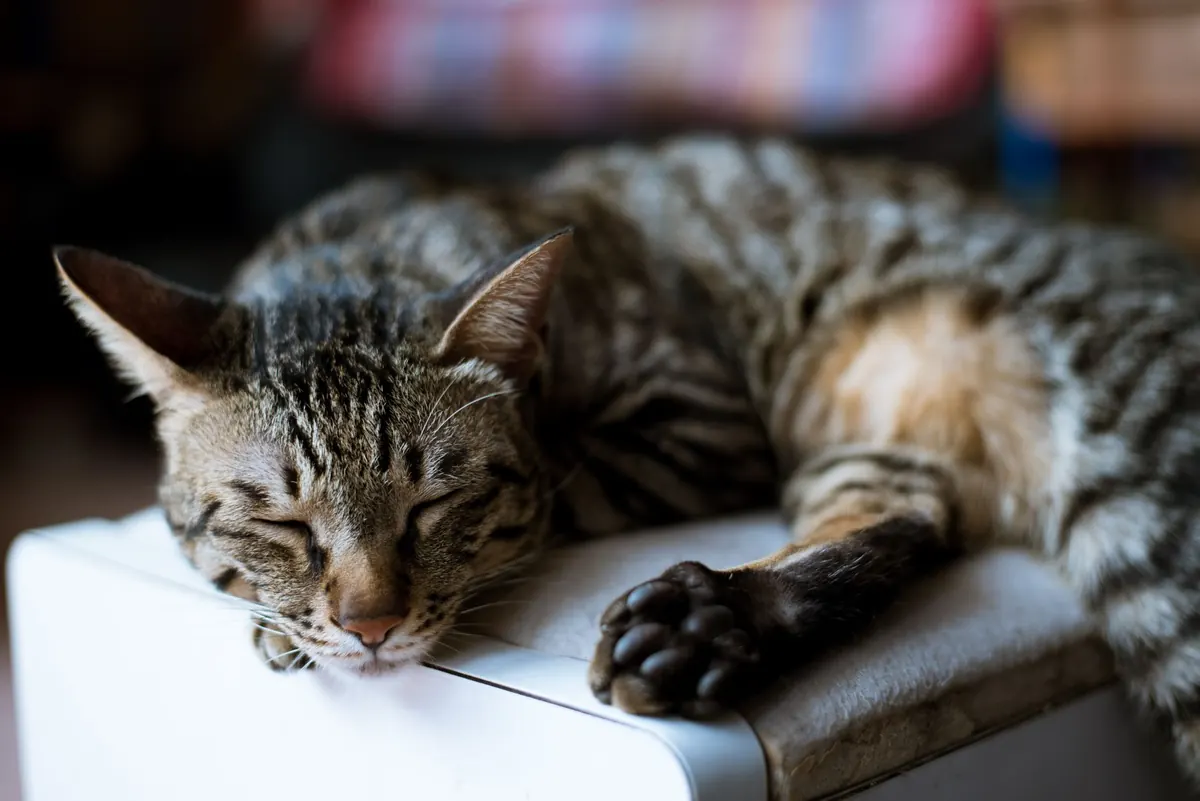
- Sleeping nearby. Choosing to sleep in your orbit — even at the foot of the bed — means your presence reads as safe.
- Coming to you when startled. Running toward you instead of under the bed is a strong sign of trust.
What independence usually looks like in practice: a cat that decides when contact happens. Ten minutes of intense cuddling followed by twenty hours of doing its own thing is completely normal, and both halves are genuine.
Building a Bond on a Cat's Terms
You can't argue a cat into being cuddlier. You can make yourself the most predictable and interesting part of its day.
- Offer, don't grab. Extend a finger or a loose hand and let the cat close the distance. If it walks away, that's an answer, not a rejection.
- Keep contact short. Stop petting while the cat still wants more. A flicking tail, flattened ears, or rippling skin means "enough."
- Play every day. A few minutes with a wand toy before meals mimics a hunt and builds partnership fast.
- Add vertical space. Shelves, cat trees and a sunny windowsill let a cat be near you without being touched. Choice is what makes contact mean something.
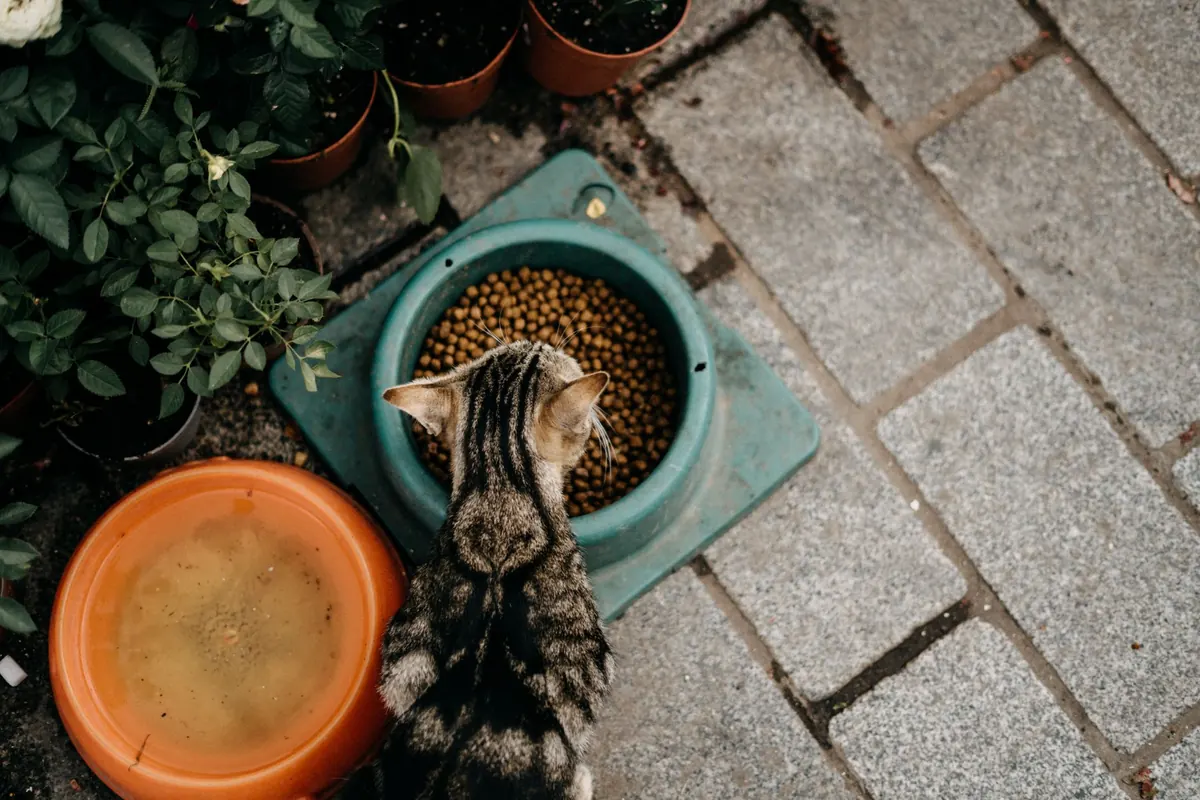
- Be boringly consistent. Same feeding times, same routines, calm handling. Predictability is how cats decide a person is safe.
- Respect the retreat. Never corner a cat to prove it loves you. Every forced interaction costs trust you'll have to earn back.
In multi-cat homes, spread resources out: separate bowls, water sources, litter boxes and resting spots. Crowding creates quiet tension that owners often misread as a cat becoming more independent.
When Withdrawal Is Worth a Vet Visit
Sudden changes in social behavior are information. A friendly cat that starts hiding, stops greeting you, flinches at touch, or goes quiet around mealtimes may be in pain or unwell. Cats hide discomfort well, and the first visible sign is often a shift in how much they want to be around you. Book a veterinary appointment rather than waiting to see if it passes. If the change comes with litter box problems, appetite loss or weight change, treat it as urgent. For anything health-related, your veterinarian is the person to ask.
The Practical Version
Cats are more independent than dogs in the sense that they don't need your instructions to feel secure, and they won't perform enthusiasm on request. They are not independent in the sense that they don't care. Most cats attach to their people, prefer them to strangers, and notice when they're gone.
The useful move is to stop grading your cat against a dog. Watch for the signals your cat actually sends — the following, the blinking, the sleeping nearby — and answer them. What you get is a relationship that looks different from a dog's, and is often more rewarding precisely because your cat chose it.
Photo: IlonaBurschl / Pixabay