


It usually starts quietly. You sit down, a cat arrives, circles twice, and then the front paws get to work: push, push, push, claws catching the weave of your sweater. Within a minute your thighs have been tenderized and there's a purr vibrating somewhere near your sternum. Cat people call it making biscuits, kneading, or happy paws. Whatever the name, the question is the same: what is actually happening? Kneading is one of the oldest behaviors in a cat's repertoire, and it survives into adulthood because it works. It feels good, it communicates something, and it usually means your cat has decided you are safe.
What Kneading Looks Like, and What Comes With It
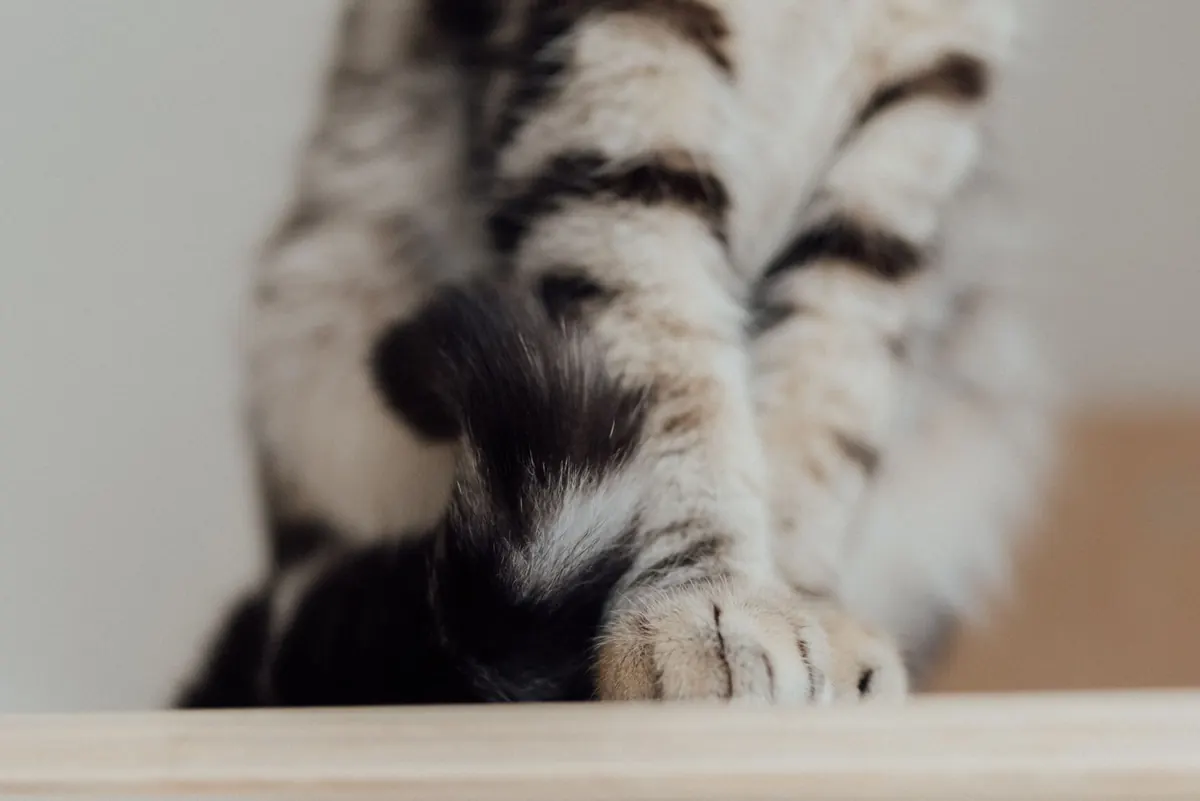
The core motion is simple: the front paws press down alternately, one while the other lifts, with the claws extending and retracting on each push. Some cats add a slow rocking of the back end; others brace their hind legs and put their whole weight into the front. A few push so hard they slide themselves backwards across the sofa.
Kneading rarely travels alone. Watch for the companions:
- Purring, often louder than usual
- Drooling, especially in cats who knead on fabric
- Nursing or suckling motions on a blanket, sleeve or earlobe
- Half-closed eyes and slow blinks
- Circling and resettling before the paws start
Most cats have a preferred surface. Fleece, wool, a folded duvet, a particular hoodie that has not been washed in a while. They also have a preferred person, which is worth remembering the next time you feel left out.
The Kitten Reflex That Never Fully Switches Off
Kittens knead their mother's belly within the first days of life. The pressure helps stimulate milk flow, so the behavior is tied from the very beginning to warmth, food and safety. The motor pattern gets laid down early and reinforced dozens of times a day.
Weaning takes away the milk but not the wiring. The reflex stays, and it keeps its original associations. When your adult cat kneads your lap, it is not literally mistaking you for its mother. It is dropping into the same relaxed, cared-for state of mind that the motion has always produced. Think of it as a comfort setting your cat can switch on, and one it only switches on around things it trusts.
Comfort, Self-Soothing and the Security-Blanket Effect
Not every bout of kneading is pure bliss. Cats often knead as they settle down, the way you might fluff a pillow before sleep. Others do it when something is slightly off: a new apartment, a vet waiting room, the arrival of a houseguest, a move to a different bed. The rhythm itself seems to be regulating, a small repetitive motion that takes the edge off.
That is why a cat may knead harder and longer during a stressful week. It is not a sign that something is wrong, but it is a useful signal. If your cat suddenly kneads far more than usual, look at what changed in the household before you look at the cat.
Scent, Territory and a Little Nest Building
Cat paw pads contain scent glands. Every press leaves a small chemical signature behind, which is one reason cats return to the same blanket, cushion or shoulder again and again. In a multi-cat home you may notice a shared kneading spot becoming a sort of communal noticeboard.
The second job is mechanical. Bunching and pushing fabric into a mound is a version of the nesting behavior wild cats use to flatten grass and make a bed. When your cat kneads your duvet into a lump and then curls up on top of it, that is the whole sequence in miniature.
One myth worth clearing up: kneading is not dominance, and your cat is not marking you as property. Cats do not organize themselves into the rigid pecking orders people once assumed, and this behavior is far more about comfort than control.
What It Says About Your Bond
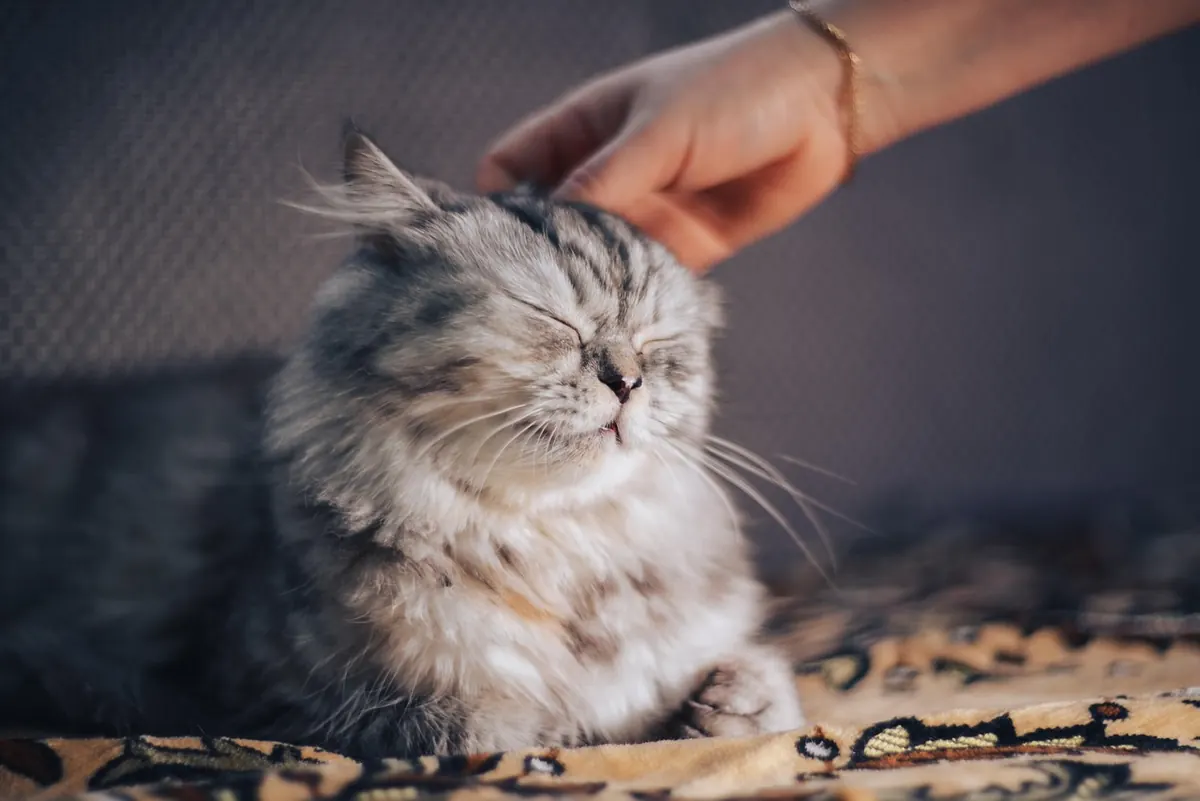
Cats are choosy about where they relax. A cat that kneads on you has made a decision: this is a safe place, and this person is not going to grab, startle or shove it away. Many cats live in a house for years and knead the sofa, the bed and one specific human — and nothing else.
Kneading usually comes with a body that has gone loose. The tail is still, the ears are forward, the eyes are soft. If your cat kneads you and then falls asleep on your legs, you have been formally accepted. The mild downside is that this trust is expressed with claws.
When Biscuit-Making Hurts: Practical Fixes
You do not have to choose between your cat's comfort and your own skin.
- Trim the sharp tips of the front claws every two to three weeks. Just the clear hook at the end, well away from the pink quick. Ask your vet or a groomer to show you once.
- Keep a dedicated kneading blanket. A thick fleece throw that lives on the couch works well. Lay it over your lap before the cat arrives rather than after.
- Redirect to a pillow or cat bed set right beside you. Slide it under the paws mid-knead. Most cats accept the swap if the surface feels similar.
- Wear something with a bit of padding when you know the cat is in the mood. A folded quilt over the thighs beats flinching.
- Never punish it. Yelling, spraying or pushing the cat off teaches only that laps are unpredictable, and the behavior usually gets worse along with the relationship.
- If your cat suckles fabric intensely, offer a designated soft toy or blanket instead of your clothing, and keep wool items out of reach. Swallowed fibers can cause a blockage.
When to Check With Your Vet
Kneading on its own is normal. A sudden change in how much your cat does it, or kneading paired with restlessness, pacing, loud vocalizing or licking at the belly, is worth a veterinary appointment. It can accompany pain or urinary discomfort, and unspayed females may knead and nest before going into heat. Compulsive fabric sucking that happens for long stretches, leaves the fabric wet through, or leads to swallowing is also worth raising with your vet rather than managing alone.
Living With a Determined Kneader
Accept that you have a biscuit factory and set yourself up accordingly. Trim the nails, keep the fleece throw within reach, and put a pillow next to you so your cat has somewhere to land. When the paws start pressing, resist the urge to move. That slow, rhythmic push is the closest thing a cat has to saying it feels completely at home — and it is choosing to say it on you.
Photo: Arina Krasnikova / Pexels